
Choosing the right nonwoven machinery for PP or PET fabric is primarily a matter of aligning material properties, production goals, and long-term operational strategy. The correct decision depends on understanding polymer behavior, fabric performance requirements, production capacity expectations, and the level of automation needed. For manufacturers and investors, selecting the wrong equipment can lead to inefficiencies, quality inconsistencies, and avoidable operating costs, while the right machinery becomes a stable foundation for scalable production.
In this article, we examine how professional buyers evaluate nonwoven production lines for polypropylene (PP) and polyester (PET) fabrics, with practical examples from hygiene, filtration, and industrial applications.
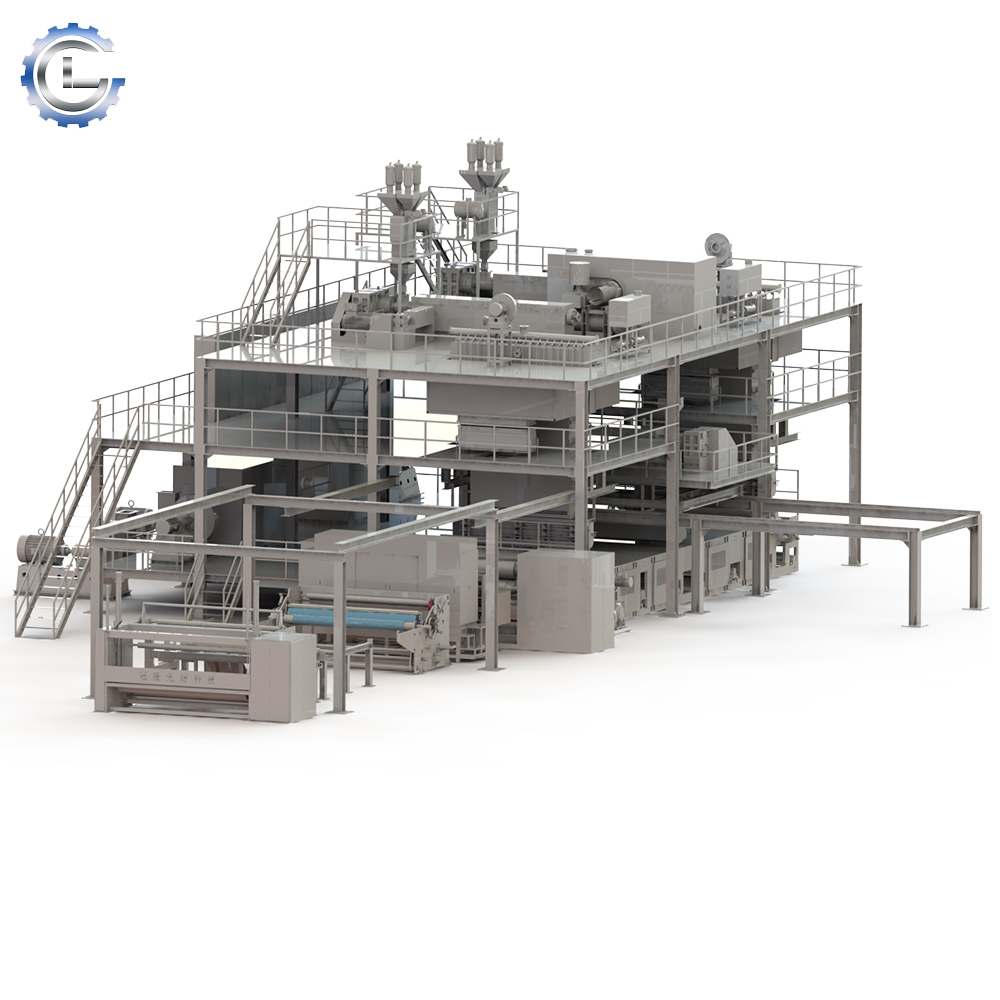
Understanding PP and PET in Nonwoven Production
Polypropylene and polyester are the two most widely used polymers in nonwoven manufacturing, yet their physical characteristics and processing requirements differ significantly.
PP is valued for its low density, chemical resistance, and cost efficiency. It is widely used in hygiene products, medical disposables, agricultural covers, and filtration media. PP’s relatively low melting point allows for high-speed processing and lower energy consumption, making it ideal for large-scale production lines.
PET, on the other hand, offers higher tensile strength, better thermal stability, and superior dimensional retention. PET nonwovens are commonly used in automotive interiors, geotextiles, carpet backing, and industrial filtration, where durability and structural integrity are critical. PET processing typically requires higher temperatures and more precise control of stretching and bonding stages.
Understanding these material fundamentals helps decision-makers narrow down machinery configurations that match both technical and commercial objectives.
Selecting the Appropriate Nonwoven Technology
The next step in choosing the right machinery is identifying the most suitable nonwoven process for the intended fabric performance.
Spunbond technology is widely used for producing continuous filament nonwoven fabrics with uniform structure and good mechanical strength. A modern spunbond nonwoven machine is commonly selected for PP-based applications such as hygiene layers, packaging materials, and agricultural fabrics, where consistent quality and high productivity are essential.
Meltblown technology, by contrast, produces ultrafine fibers with excellent filtration and barrier properties. Meltblown machinery is often used for medical masks, air filtration media, and liquid filtration applications. While meltblown lines generally operate at lower throughput than spunbond lines, their value lies in functional performance rather than volume.
For PET production, needle-punching, thermal bonding, or spunbond processes may be used depending on the target fabric thickness, strength, and end-use requirements. Decision-makers should evaluate whether single-process lines or combined systems are more suitable for their product portfolio.
Evaluating Production Capacity and Line Configuration
Production capacity is a core consideration for any nonwoven machinery investment. Buyers must assess both current demand and long-term growth expectations.
High-output PP lines are often designed with wide working widths and multi-beam configurations to maximize productivity. However, higher capacity also increases requirements for raw material handling, power supply, and downstream processing.
PET lines, while sometimes operating at lower speeds, may require additional equipment for fiber stretching, heat setting, and web consolidation. These steps directly influence fabric strength and dimensional stability.
The table below summarizes key capacity considerations when selecting nonwoven machinery.
Table: Capacity Considerations for PP and PET Nonwoven Lines
| Factor | PP Nonwoven Lines | PET Nonwoven Lines |
|---|---|---|
| Typical output focus | High volume, cost efficiency | Strength, durability |
| Processing temperature | Lower | Higher |
| Line speed | Generally higher | Moderate |
| Energy consumption | Lower | Higher |
| Common applications | Hygiene, medical, packaging | Automotive, geotextiles, industrial |
Matching capacity design with realistic market demand helps avoid overinvestment or production bottlenecks.
Automation, Control Systems, and Operational Stability
Automation level plays a decisive role in production consistency and labor efficiency. Modern nonwoven production lines increasingly rely on integrated control systems for temperature regulation, fiber distribution, and web uniformity.
For PP production, automated die control and real-time monitoring help maintain consistent basis weight and fabric appearance during long production runs. In PET lines, precise control over thermal and mechanical parameters is essential to achieve repeatable fabric strength and elongation characteristics.
Advanced automation also supports faster changeovers, reduced scrap rates, and improved traceability. For decision-makers managing multiple product grades, these advantages translate directly into lower operating costs and higher production flexibility.
Quality Requirements and End-Use Performance
Nonwoven machinery selection must always be guided by end-use performance expectations. Fabric properties such as tensile strength, air permeability, softness, and filtration efficiency are determined not only by raw materials but also by equipment design and process stability.
For example, hygiene applications demand uniform fiber distribution and low defect rates, while industrial filtration requires precise pore size control. PET-based geotextiles must meet strict mechanical performance standards over long service lifetimes.
Equipment suppliers with experience across multiple industries can provide valuable guidance during this evaluation stage. Their understanding of how machinery parameters influence fabric performance helps buyers avoid costly trial-and-error during commissioning.
Midway through the decision process, engaging directly with experienced manufacturers can clarify technical details and customization options. For tailored guidance on selecting nonwoven machinery, you can contact the Guanlong technical team via this link: Get in touch with our specialists
Lifecycle Cost and Long-Term Value
Beyond initial purchase price, total lifecycle cost is a critical factor for B2B buyers. Energy consumption, maintenance requirements, spare parts availability, and equipment lifespan all influence return on investment.
PP lines are often favored for their lower energy costs and simpler maintenance, while PET lines may justify higher operating expenses through premium product positioning and longer service life of finished fabrics.
A thorough evaluation should include projected downtime, maintenance intervals, and upgrade potential. Machinery designed with modular components and standardized parts typically offers greater long-term flexibility and cost control.
Compliance, Standards, and Sustainability Considerations
Regulatory compliance and sustainability are becoming increasingly important in nonwoven manufacturing decisions. Machinery must support production processes that comply with local environmental regulations and international quality standards.
PET recycling and the use of recycled fibers are growing trends, particularly in Europe and North America. Equipment capable of processing recycled PET while maintaining fabric performance provides a competitive advantage.
Energy-efficient designs, waste reduction features, and compatibility with future regulatory requirements should be considered part of the machinery selection criteria, not optional extras.
FAQ
What is the main difference between PP and PET nonwoven machinery?
PP machinery typically focuses on high-speed, cost-efficient production, while PET machinery emphasizes strength, thermal stability, and durability, often requiring higher processing temperatures.
Can one production line handle both PP and PET?
In most cases, PP and PET require different line configurations due to their distinct melting points and processing behaviors. Dedicated lines are generally recommended for stable production.
How important is automation in nonwoven production lines?
Automation is critical for maintaining consistent quality, reducing labor dependency, and supporting efficient long-term operation, especially in high-volume or multi-grade production.
What industries commonly use PP nonwoven fabrics?
PP nonwovens are widely used in hygiene products, medical disposables, agriculture, packaging, and filtration.
What industries rely on PET nonwoven fabrics?
PET nonwovens are commonly applied in automotive interiors, geotextiles, carpet backing, industrial filtration, and construction materials.
Why Choose Guanlong as Your Nonwoven Machinery Partner
Guanlong is a professional nonwoven production line manufacturer with extensive experience in designing and delivering machinery for both PP and PET nonwoven fabrics. Our equipment is developed with a strong focus on process stability, operational efficiency, and long-term reliability.
By combining engineering expertise with practical production insights, Guanlong supports customers across hygiene, industrial, filtration, and technical textile markets. From initial consultation to installation and ongoing technical support, we work closely with decision-makers to ensure each production line aligns with their specific material, capacity, and quality requirements.
Choosing Guanlong means investing in machinery designed not only for today’s production needs, but also for future scalability and market adaptability.
References
Wikipedia – Nonwoven fabric
https://en.wikipedia.org/wiki/Nonwoven_fabric
Wikipedia – Polypropylene
https://en.wikipedia.org/wiki/Polypropylene
Wikipedia – Polyester
https://en.wikipedia.org/wiki/Polyester
EDANA – The International Association Serving the Nonwovens and Related Industries
https://www.edana.org