
How to optimize material usage and reduce waste in nonwoven production is not simply a technical adjustment, it is a strategic decision that directly impacts profitability, product consistency, and long term competitiveness. The answer lies in combining precise process control, intelligent equipment configuration, raw material optimization, and real time monitoring systems. For B2B manufacturers operating in hygiene, medical, agricultural, or industrial fabric sectors, reducing material loss by even 1 to 3 percent can translate into substantial annual savings. In this article, we explore practical, equipment driven strategies that nonwoven producers can implement to increase yield, lower scrap rates, and improve operational efficiency.
Understanding Where Material Waste Occurs in Nonwoven Production
Before optimization begins, decision makers must clearly identify where waste is generated. In spunbond and spunmelt processes, material loss typically occurs at the following stages:
Polymer Feeding and Extrusion
Inconsistent polymer feeding or unstable melt pressure can cause uneven filament formation, leading to off spec fabric. Excessive purging during material changeover also contributes to resin waste.
Web Formation and Laydown
Poor airflow control or unstable die head alignment may produce uneven GSM distribution. Sections outside tolerance often become downgraded or scrapped.
Edge Trimming and Slitting
Improper width configuration or inaccurate trimming systems can result in excessive edge waste. Over trimming directly increases raw material loss.
Start Up and Shutdown Phases
A significant portion of scrap is generated during line startup when parameters have not yet stabilized. Optimizing ramp up procedures can substantially reduce this loss.
Understanding these loss points provides the foundation for systematic improvement.
Optimizing Raw Material Selection and Handling
Material optimization begins with the right resin strategy. Polypropylene is the primary polymer used in spunbond and meltblown nonwoven production. Selecting consistent melt flow index material ensures stable filament diameter and web uniformity.
Improve Polymer Consistency
Work with certified suppliers to ensure narrow MFI tolerance. Variations in viscosity affect fiber formation and may increase off grade output.
Reduce Contamination Risk
Install advanced filtration systems in extrusion units to prevent gel formation. Contaminants often result in fabric defects that cannot be recovered.
Recycle Edge Trim Efficiently
Modern nonwoven machines allow inline edge trim recycling. Reintroducing trimmed material into the extrusion system reduces virgin polymer consumption while maintaining quality stability when properly controlled.
Careful material handling, storage in dry environments, and automated feeding systems further reduce avoidable waste.
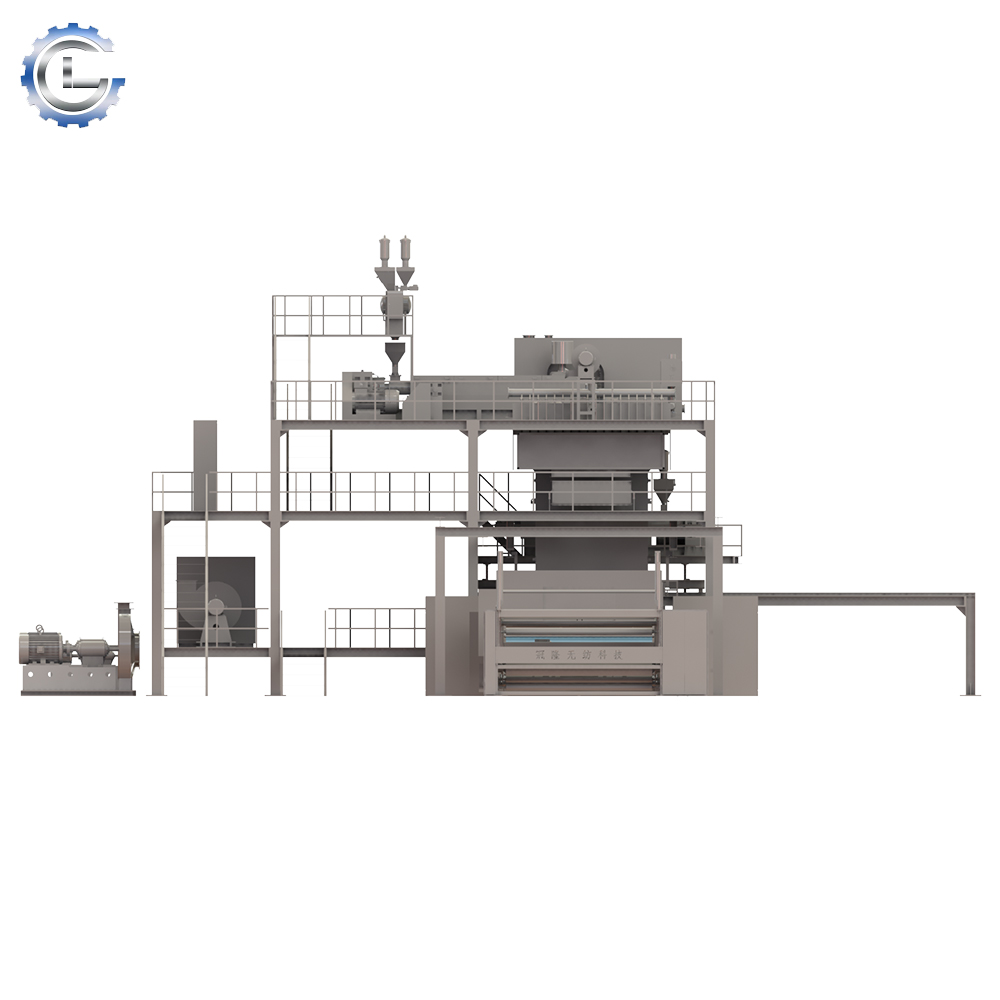
Precision Process Control for Yield Improvement
Equipment configuration plays a decisive role in material utilization. Advanced automation and monitoring systems help maintain uniform fabric quality and minimize off spec output.
Optimize Extrusion Temperature Profile
Stable melt temperature ensures consistent fiber formation. Temperature deviation leads to weak spots and fabric inconsistency.
Improve Airflow and Quenching Control
Balanced cooling airflow enhances filament strength and uniformity. Uneven cooling can cause shrinkage and web defects.
Fine Tune GSM Control Systems
Modern fabric making machine platforms use closed loop control systems to monitor basis weight in real time. Automatic adjustment of polymer throughput maintains target GSM and prevents over consumption of raw materials.
Below is a summary of optimization strategies and their impact.
Table 1: Key Strategies to Reduce Waste in Nonwoven Production
| Optimization Area | Action Strategy | Expected Impact |
|---|---|---|
| Polymer Feeding | Automated gravimetric dosing | 1 to 2 percent raw material savings |
| Die Head Control | Precise temperature zoning | Reduced fiber breakage |
| Web Uniformity | Real time GSM monitoring | Lower off spec rate |
| Edge Trim System | Inline recycling | Reduced virgin resin usage |
| Startup Procedure | Pre programmed ramp sequence | Lower startup scrap |
These improvements may appear incremental individually, but together they significantly increase production yield.
If you are evaluating equipment upgrades to enhance material efficiency, contact our engineering team here: Request a technical consultation
Intelligent Equipment Design and Automation
Modern production lines integrate smart control systems that reduce human error and variability. Automation contributes directly to lower waste generation.
PLC and Data Driven Monitoring
Advanced nonwoven fabric machine systems include centralized PLC control panels that continuously track pressure, temperature, speed, and airflow. Real time alarms prevent deviations from escalating into large scale scrap events.
Predictive Maintenance Systems
Sensors detect vibration abnormalities or pressure fluctuations in advance. Early intervention prevents sudden shutdowns that typically generate high volumes of waste fabric.
Automated Tension Control
Proper winding tension reduces roll defects and prevents telescoping, minimizing downgraded inventory.
Investing in intelligent automation reduces dependency on manual adjustments and enhances production stability.
Reducing Waste Through Operational Excellence
Technology alone is insufficient without disciplined operational management.
Standardized Startup Protocols
Establish optimized parameter presets to reduce trial and error during startup. Consistency lowers scrap volume.
Operator Training
Skilled operators understand how parameter changes influence fiber formation and web bonding. Continuous training improves response time and quality control.
Lean Production Principles
Implement structured waste analysis frameworks to identify inefficiencies. Monitoring scrap rate by shift and product category allows data driven improvements.
Energy Optimization
Reducing energy fluctuation stabilizes temperature control and indirectly improves material efficiency.
Measuring Performance: KPIs for Waste Reduction
Executives should track measurable indicators to evaluate improvement initiatives.
Table 2: Recommended KPIs for Nonwoven Waste Management
| KPI | Description | Target Range |
|---|---|---|
| Scrap Rate | Percentage of off spec output | Below 3 percent |
| Material Yield | Saleable output divided by input | Above 97 percent |
| GSM Deviation | Variation from target basis weight | Within ±2 percent |
| Edge Trim Ratio | Trim width versus total width | Optimized for product spec |
Regular performance reviews ensure continuous optimization rather than one time adjustments.
Frequently Asked Questions
What is the main cause of material waste in nonwoven production
The primary causes include unstable extrusion temperature, inconsistent polymer quality, improper airflow control, and inefficient startup procedures.
Can recycled edge trim affect fabric quality
When processed through controlled inline recycling systems and blended properly, edge trim can be reused without significant impact on mechanical properties.
How much material savings can be achieved through optimization
Depending on existing inefficiencies, manufacturers typically achieve 2 to 5 percent reduction in raw material consumption after implementing automation and process improvements.
Is automation necessary to reduce waste
While basic improvements can be manual, advanced automation significantly improves stability and reduces variability, which directly lowers scrap rates.
How does GSM control influence material usage
Accurate GSM control prevents overfeeding polymer. Even slight overproduction of basis weight increases raw material consumption across large production volumes.
Conclusion
Optimizing material usage and reducing waste in nonwoven production is a multifaceted strategy that combines raw material consistency, precise process control, intelligent equipment design, and disciplined operations management. For decision makers, the objective is not only environmental responsibility but also improved margins and predictable ROI. Small improvements in yield accumulate into substantial financial advantages over time.
Guanlong is a professional nonwoven machine supplier committed to delivering advanced production solutions that enhance efficiency, stability, and material utilization. With engineering expertise and customized system integration capabilities, Guanlong supports manufacturers in achieving higher productivity while minimizing operational waste.
References
Polypropylene production and properties overview: https://en.wikipedia.org/wiki/Polypropylene
Nonwoven fabric manufacturing principles: https://en.wikipedia.org/wiki/Nonwoven_fabric
Association of the Nonwoven Fabrics Industry (INDA): https://www.inda.org/